Back to Home
Leather goods
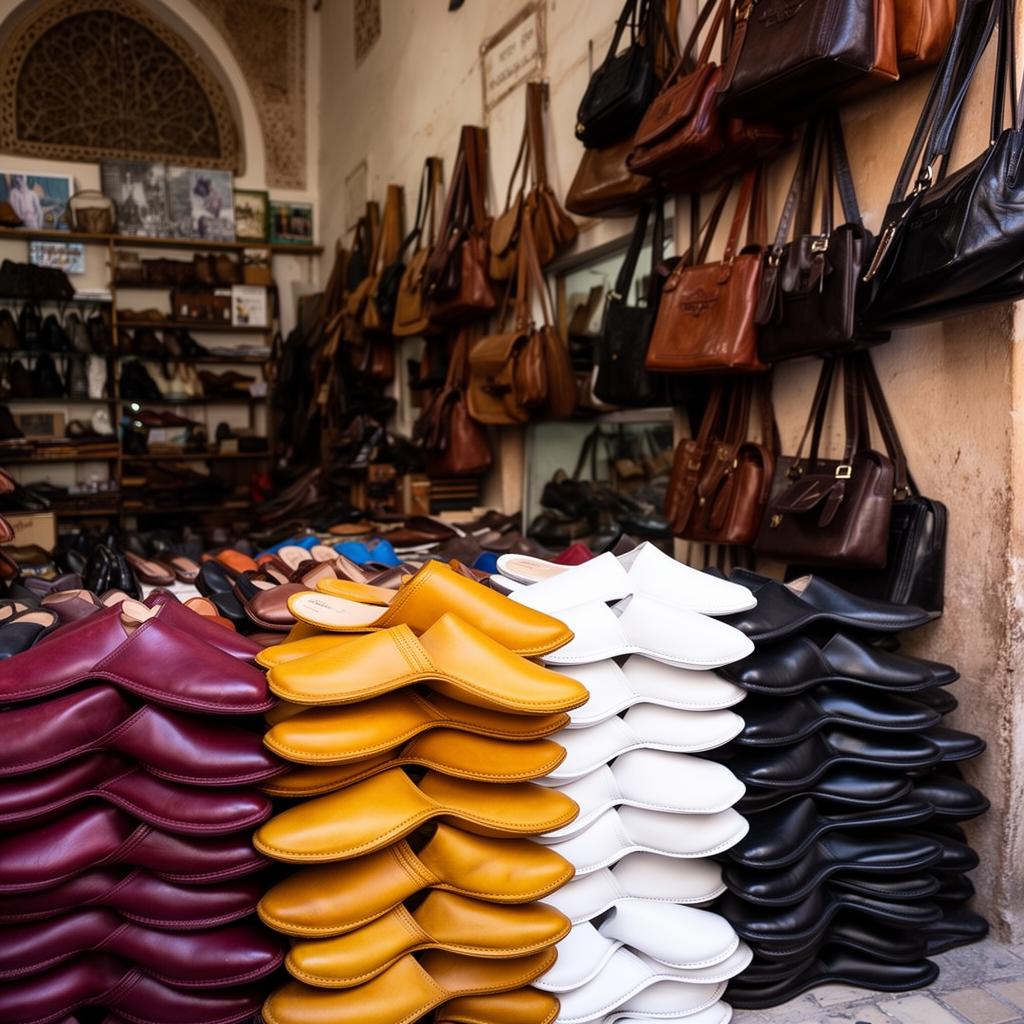
Babouches, bags and belts in real leather.
Practical tips
Check leather quality before buying.
Good to know
Prices can change depending on season, provider or availability. Please check the official website or Google Maps before going.
Continue the walk
How to spot real leather? Luna can guide you.
Overview
Moroccan leather is famous for babouches, bags, belts, poufs and jackets. Fez remains the historic capital of tanning, but Tangier also has excellent workshops and sellers, especially in the medina. Knowing how to spot real, often vegetable-tanned leather avoids surprises once you're home.
Types and styles to know
- Babouches: traditional slippers, often goatskin. Yellow for men, colourful or embroidered for women.
- Bags and pouches: soft goatskin or stiffer cowhide. Stitching and lining reveal quality.
- Moroccan poufs: sold empty, filled at home. Check weight and stitching before buying.
- Belts and small accessories: perfect for a first purchase, easy to compare across shops.
- Jackets and coats: a bigger commitment — try them in daylight and check inner seams.
How to recognise quality
- Smell: real leather smells earthy and tannic, never of plastic or chemical glue.
- Grain: irregular, with small natural defects. Too smooth and perfect = often synthetic.
- The edge: on solid leather, colour runs through the piece; coated leather shows a coloured surface layer.
- Stitching: even, tight, no loose threads. A well-sewn fabric lining is a good sign.
- Suppleness: fold a corner. Real leather creases finely and recovers, without cracking.
Checklist before you pay
- Final price in dirhams written on a receipt or invoice.
- Exact description (material, colour, size) on the receipt.
- Try items in daylight or under a white lamp.
- For a pouf: ask for it empty and folded — easier to carry.
- Check zips, buckles and rivets — those are the first things to fail.
Bargaining with respect
- Compare at least 3 shops for the same item (babouches, bag, belt).
- Buy several pieces at one shop to get a real price gesture.
- Stay smiling: firmness isn't aggression.
- Politely decline if quality doesn't match, even after a long chat.
Mistakes and red flags
- Buying chemically treated babouches that bleed onto socks after rain.
- Confusing “camel” or “dromedary leather” with a protected label — always ask for the exact material.
- Paying for a pre-filled pouf and hauling it heavy — empty is much easier.
Take home, shipping, customs
- Small items: fit anywhere, no issue.
- Leather jackets: better to travel with them; shipping adds insurance and customs.
- Empty poufs: ask for vacuum-flat packing if possible to save space.
Useful Darija phrases
- شنو نوع الجلد؟What kind of leather is it?
- واش الصباغة ما تنزلش؟Does the colour bleed?
- بغيت نجرب.I'd like to try it on.
- بشحال هاد اثنين؟How much for these two?
On Google Maps
Ask Luna
Frequently asked questions
In medina shops around Petit Socco and Siaghine street, and at specialist artisans. For quality pieces, take time to compare several workshops.