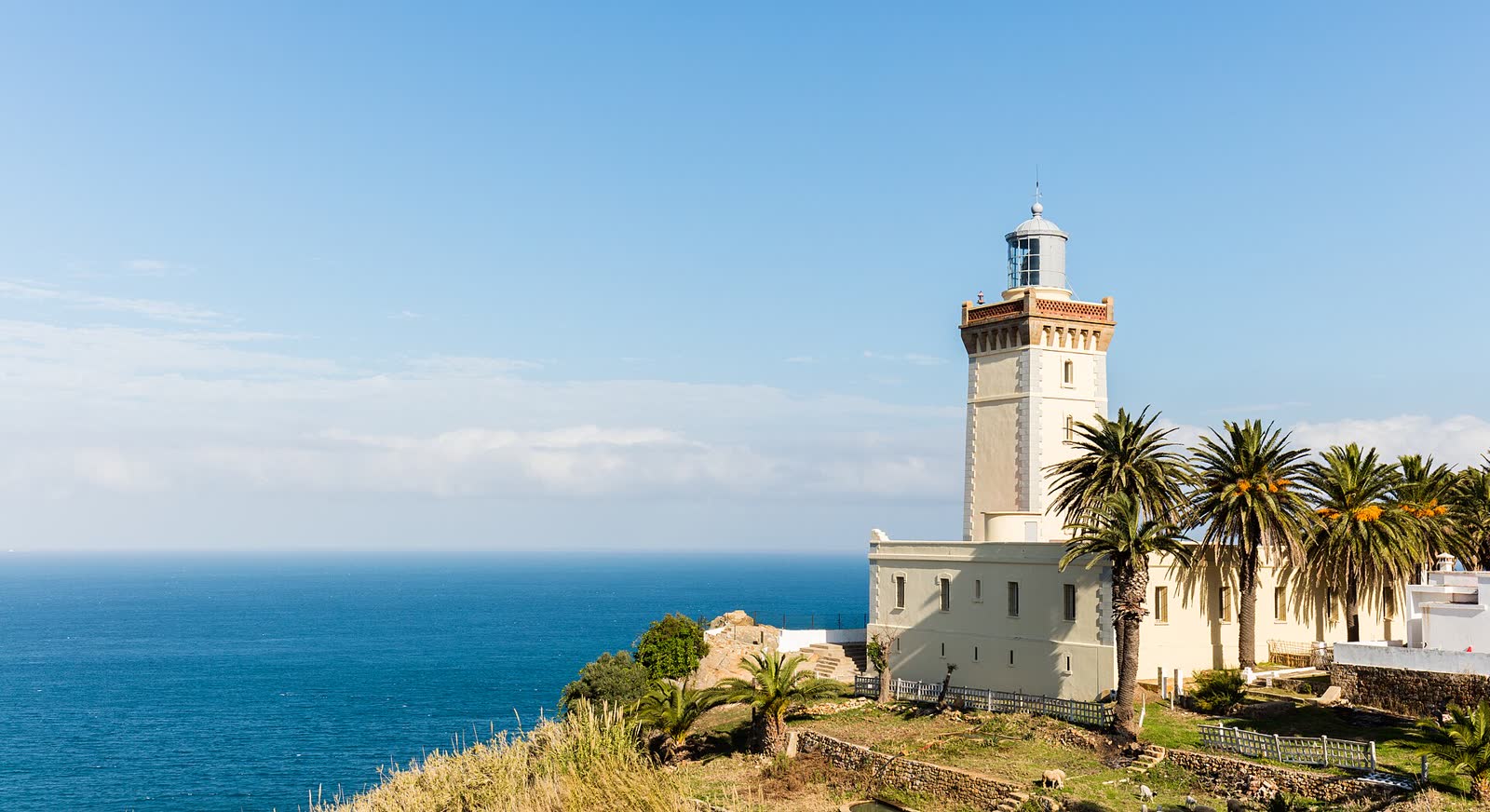
Tangier: city between two seas
Atlantic and Mediterranean, Africa and Europe.
Poetic geography: in Tangier two seas embrace and two continents look at each other. This shapes everything — light, climate, food, mindset.
A unique geography
Tangier is one of the few major cities in the world touching two seas at once: the Mediterranean to the east and the Atlantic to the west. The Strait of Gibraltar, only 14 km wide at its narrowest, brings Spain into view from the Corniche on clear days. This double maritime frontage explains the variety of landscapes: Atlantic beaches pounded by swell at Achakkar, sheltered Mediterranean coves to the east, and the Cap Spartel cliffs right where the two seas meet.
What this climate shapes
Tangier's climate combines Mediterranean mildness with Atlantic humidity: mild rainy winters, wind-tempered summers, bright springs and autumns. This particular weather explains the green hills, morning mists over the bay and the special light that drew so many painters from Delacroix to Matisse. It also shapes the food: fish from two seas, octopus, sardines, plus vegetables, citrus and olive oil from nearby countryside.
Feel both seas in one day
In a single day, you can touch both fronts: morning at Cap Spartel with the lighthouse and Caves of Hercules where the Atlantic roars; lunch at Achakkar beach; back to the Mediterranean Corniche for the evening walk and a drink at the Marina. This contrast — wild in the west, urban and calm in the east — is what makes the phrase 'Tangier, city between two seas' more than a poetic image: it is a concrete experience, possible in a few hours.
Audio guide
Tangier between two seas
Why Tangier's geography explains almost everything: light, climate, history, soul.