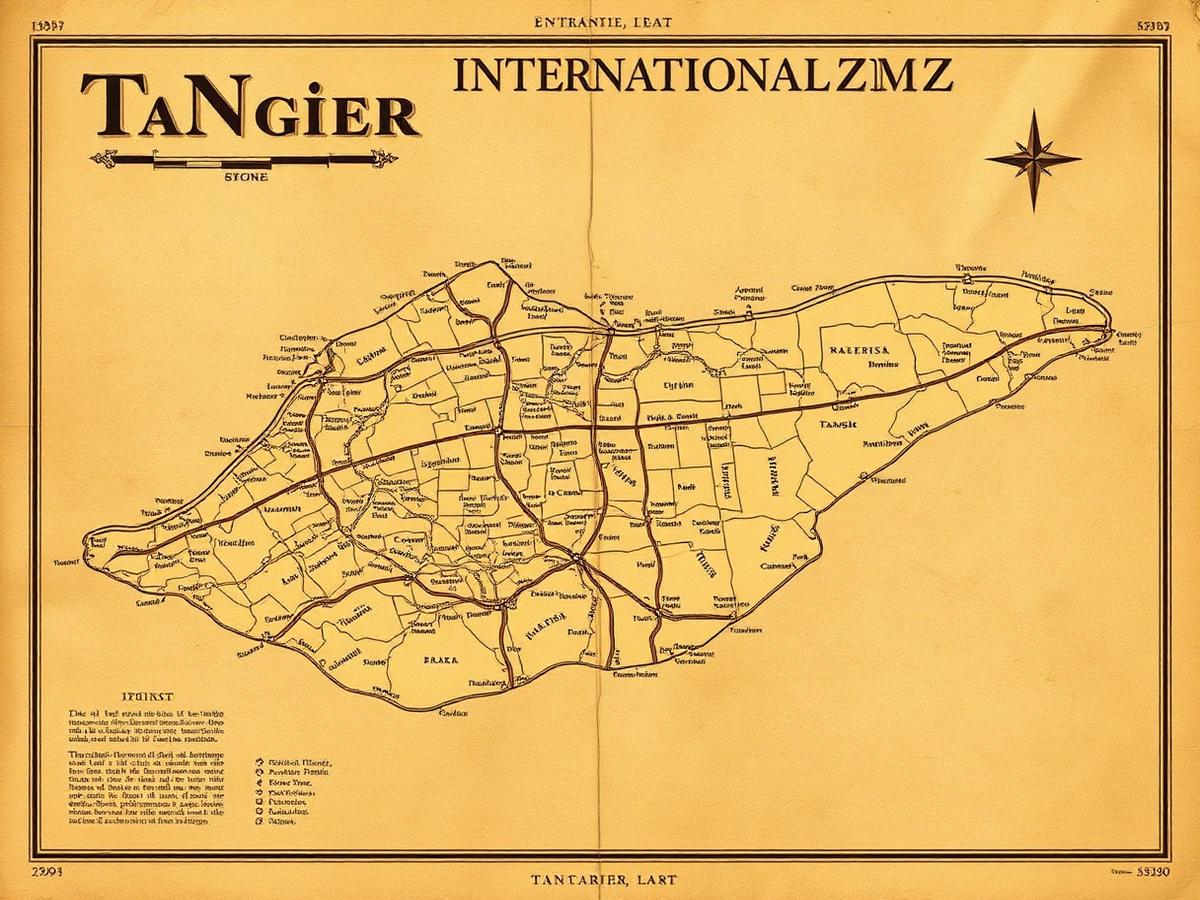
Tangier and Europe
Portuguese, Spanish, English, French: a long dialogue.
From the 15th to the 20th century, Tangier passes between Portuguese, Spanish and English hands before returning to Morocco. Each period leaves traces: architecture, languages, food, and a unique habit of cultural coexistence.
Portuguese, Spanish and English
Tangier falls to the Portuguese in 1471, briefly comes under the Spanish crown, then becomes English in 1661 as part of Catherine of Braganza's dowry to Charles II. The English build an ambitious mole in the harbour and reshape the city's defences. In 1684, under Moroccan pressure, they leave Tangier and dismantle their fortifications: the city returns to Morocco under Sultan Moulay Ismail.
Diplomacy and legations in the 19th century
In the 19th century, Tangier becomes Morocco's diplomatic capital: European and American consuls and ambassadors live here, often inside the medina. The American Legation, granted by Sultan Moulay Slimane in 1821, is still today the only US National Historic Landmark outside the United States. This diplomatic concentration turns the city into a cosmopolitan stage.
A heritage still legible
Each power leaves a concrete mark: the Anglican church of St Andrew, Spanish and French place names, the architecture along Boulevard Pasteur, the vintage cinemas, the French-style cafés of Grand Socco. This heritage is not stacked or exclusive: it blends into a distinctly Tangerine way of life, deeply Moroccan but in constant dialogue with Europe.
Audio summary
A cosmopolitan city
Portuguese, Spanish, English, French: a long dialogue.