Writers, spies and cafés
Bowles, Burroughs, Genet, Matisse… a mythic scene.
Tangier was the city of Paul Bowles, William Burroughs, Jean Genet, Tennessee Williams and many more. Cafés served as improvised offices, terraces as writing salons. The city becomes a character, almost a narrator.
An extraordinary literary scene
Paul Bowles moves to Tangier in 1947 and stays for over fifty years. Around him orbit William S. Burroughs (who writes 'Naked Lunch' here), Jack Kerouac, Allen Ginsberg, Tennessee Williams, Jean Genet, Truman Capote. The discreet, cheap, tolerant city becomes a writing lab for a whole generation. Mohamed Choukri, Moroccan author of 'For Bread Alone', finds his literary ground here too, bringing the local voice into dialogue with these writers from elsewhere.
Cafés and places of the scene
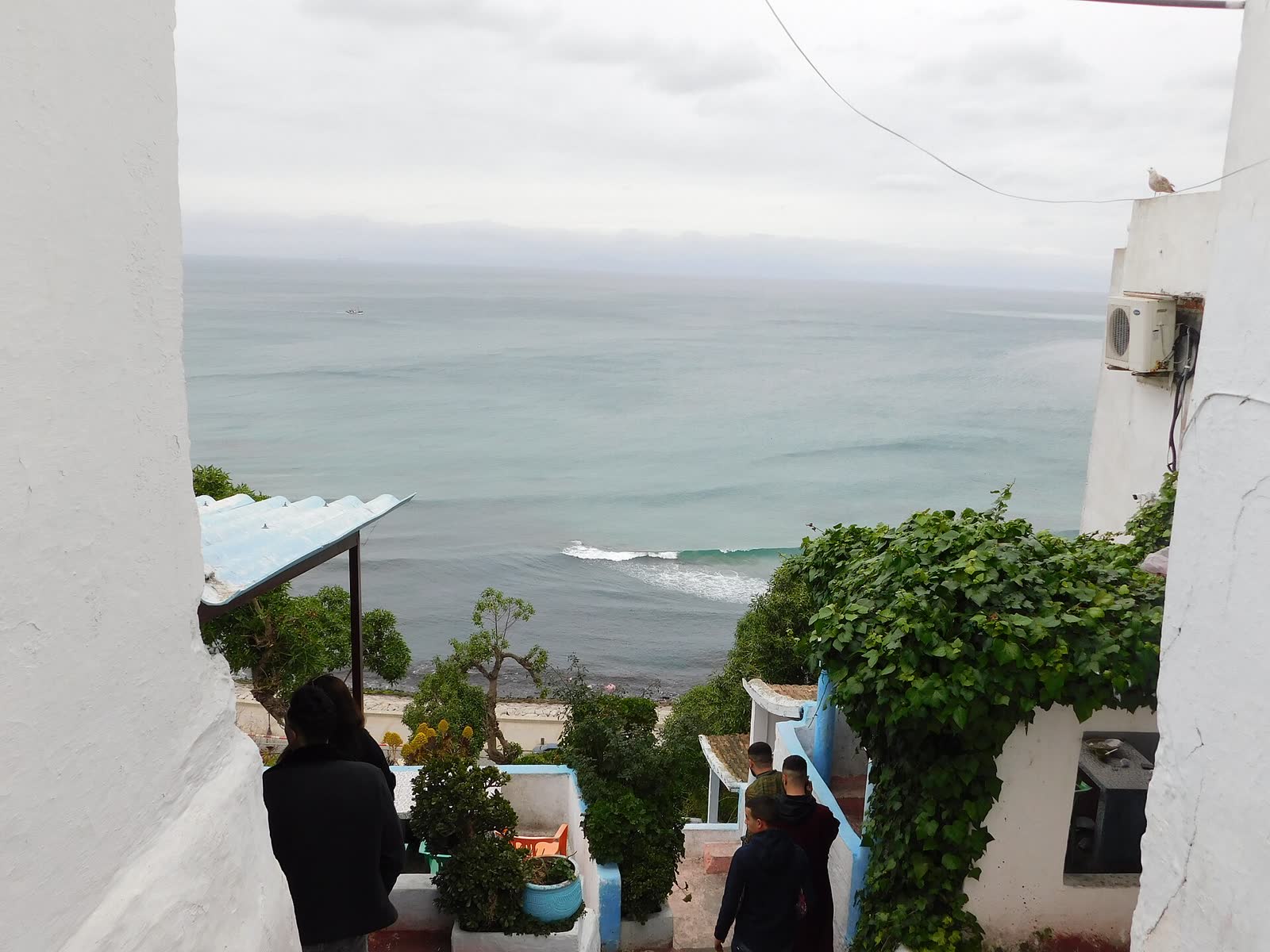
The Café Hafa, with its stepped terraces facing the strait, its mint teas and an atmosphere unchanged since 1921, remains the era's symbol: the Rolling Stones came here in 1967 to listen to the Master Musicians of Jajouka. Petit Socco with its Central and Tingis cafés, the Librairie des Colonnes on Boulevard Pasteur, the Continental Hotel by the port, Grand Socco: every address has its legend, regulars and anecdotes. The circuit can still be walked today.
Spies and grey zones
Under the international status, Tangier is also an espionage capital. British, French, American, Soviet and German services watch, brief and recruit here. After the war, the city stays a strategic listening post between Europe, Africa and the Mediterranean. Grand hotels, cafés and journalists often play a more complex role than they seem. This blend of writers, spies and exiles is the true face of the 'Tangier myth'.
Audio summary
Literary cafés
Bowles, Burroughs, Genet, Matisse… a mythic scene.