Back to Home
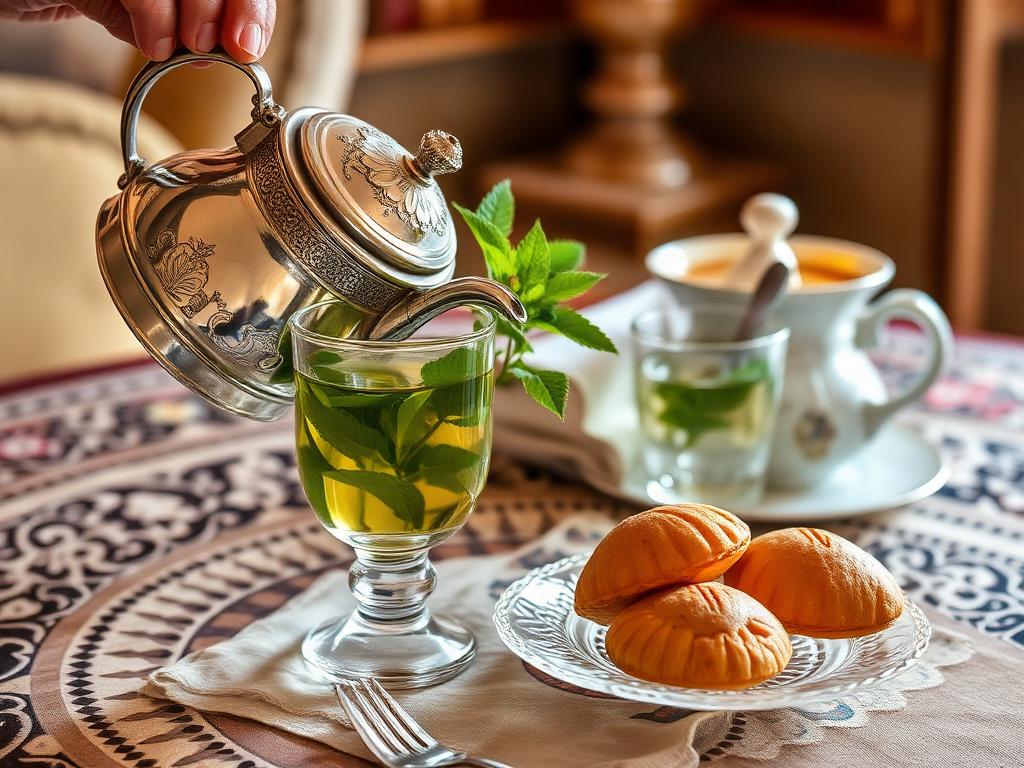
Tea and pastries
Gazelle horns, chebakia, honey briouates.
Practical tips
Traditional pastry shops in the medina.
Good to know
Prices can change depending on season, provider or availability. Please check the official website or Google Maps before going.
Overview
Mint tea and Moroccan pastries are more of a ritual than a snack. In Tangier they are shared mid-morning, mid-afternoon or after dinner, at a café, a traditional pastry shop or at home.
What are we talking about?
- Gazelle horns (kaab el-ghazal): almond crescents scented with orange-blossom water.
- Chebakia: fried rosettes dipped in honey and sesame — very present in Ramadan.
- Honey briouates: thin pastry triangles filled with almond or peanut, fried then honeyed.
- Ghriba: soft biscuits with sesame, coconut or almond.
- Sellou (sfouf): sweet mix of toasted flour, almonds and seeds. Very nourishing.
Moroccan context and Tangier
- Mint tea isn't historically Moroccan: it spread widely in the 19th century. Today it is central to the culture.
- Pouring from height aerates the tea and creates foam: it's a real technique, not just a show.
Ingredients and variants
- Tea: gunpowder green tea + fresh mint leaves + sugar loaves cracked with a hammer.
- Pastries: almonds, sesame, coconut, honey, orange-blossom water, cinnamon, fine semolina.
When it's eaten
- Late afternoon: the most iconic tea time.
- Ramadan: after ftour, chebakia and tea are everywhere.
- Family celebrations: assorted trays for guests.
Texture, taste, presentation
- Good tea is fragrant, balanced in sweetness, hot but drinkable — never bitter.
- Good pastry is neither drenched in honey nor dry — balance is delicate.
How to spot a good version
- Buy per piece in traditional shops to taste first.
- The honey used makes the difference: good honey leaves no burnt aftertaste.
How to order
- For lightly sweet tea say “chwiya skkar”; for none, “bla skkar”.
- Buy an assortment (“variés”) rather than 500 g of a single pastry.
Allergens and alternatives
- Nuts appear in almost all pastries: almond, peanut, sesame. Warn if allergic.
- Gluten and butter in most items. Few traditional vegan options.
Recipes, ingredients and availability vary from one place to another. Always confirm allergens directly with the restaurant.
Families and special needs
- Young kids: avoid very sticky pastries or those with hard chunks.
- Diabetes: order tea unsweetened and add sugar yourself.
Common mix-ups
- Treating it as plain “green tea” — local preparation changes everything.
- Buying pastries the day before a long trip without proper packaging.
Checklist before ordering
- Look at the display: high turnover = fresher.
- Ask to taste one before buying in quantity.
Useful Darija phrases
- Bghit atay bla skkar.A tea with no sugar.
- Chwiya skkar, afak.Just a little sugar, please.
- Bghit variés dyal l'halwa.An assortment of pastries.
- Bshhal l'kilo?How much per kilo?