Back to Home
Traditional Moroccan food
Tajines, couscous, harira and honey pastries.
Practical tips
Typical restaurants in medina and kasbah.
Good to know
Prices can change depending on season, provider or availability. Please check the official website or Google Maps before going.
Overview
“Traditional Moroccan cuisine” refers to slow-cooked, finely spiced dishes usually shared from the middle of the table. In Tangier, a crossroads city, you'll meet it in homes, in the medina and in many restaurants, often shaped by the sea and Spain's proximity.
What are we talking about?
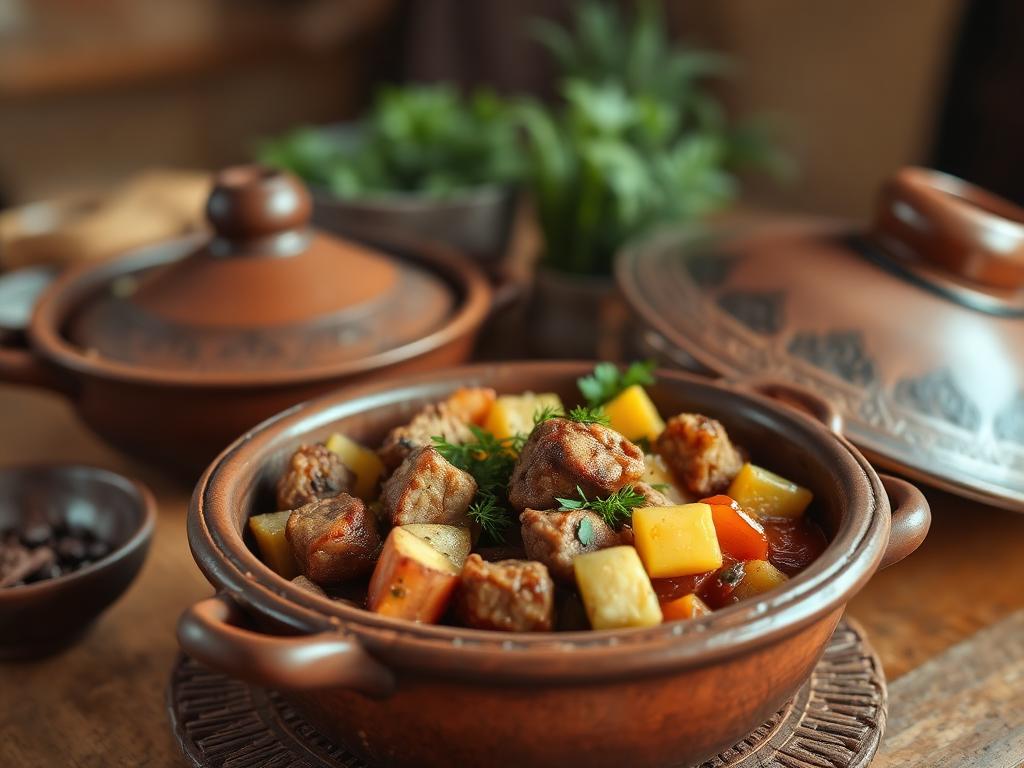
- Tajine: slow-cooked dish (meat, chicken, fish or vegetables) in a clay pot with a conical lid.
- Couscous: steamed wheat semolina served with broth, vegetables and meat. Traditionally shared on Fridays.
- Harira: tomato, chickpea, lentil and herb soup. Widely eaten during Ramadan to break the fast.
- Pastilla (bastilla): sweet-savoury pastry, traditionally with pigeon or chicken and almonds — sometimes with fish in Tangier.
- Méchoui: slowly roasted lamb, a celebration dish rather than an everyday one.
- Rfissa, tanjia, seffa: family dishes less known to travellers — worth asking about when you see them.
Moroccan context and Tangier
- Moroccan cuisine draws on Berber, Arab-Andalusian, Jewish and Saharan traditions. Tangier adds a Mediterranean and Spanish twist.
- Many dishes are meant to be shared: one big plate in the middle, bread to scoop, few individual utensils.
- Careful not to confuse “Moroccan dish” with “specifically Tangier dish” — most classics are national, not local.
Ingredients and variants
- Recurring spices: cumin, saffron, ginger, cinnamon, paprika, ras el-hanout (blend).
- Common bases: olive oil, onion, coriander and parsley, tomato, preserved lemon, olives.
- Local variants: fish tajine in Tangier, kefta tajine with eggs, fish couscous typical of the northern coast.
When it's eaten
- Lunch: the main meal, often generous — tajine or couscous, especially on Fridays.
- Dinner: lighter at home, later in restaurants (from around 8 pm).
- Ramadan: harira opens the ftour meal; couscous and pastries appear at other times.
- Celebrations: méchoui, pastilla and large couscous star at weddings, eids and family events.
Texture, taste, presentation
- Tajines: tender texture, thick fragrant sauce, meat that falls apart with a spoon.
- Couscous: fluffy semolina, never gummy, ladled with broth at the table.
- Harira: thickened with flour and water, velvety texture, served hot with dates and chebakia.
How to spot a good version
- A good tajine has been slow-cooked: the sauce is neither watery nor burnt, the meat doesn't need a knife.
- Real couscous is made the same day; if it arrives in 5 minutes it's often reheated carelessly.
- Good harira stays fluid, not sticky, and not overwhelmingly salty.
- Pastilla balances sweet and savoury: too much icing sugar often hides a weak filling.
How to order
- Specify the protein: beef, lamb, chicken, fish or vegetables only.
- For two, a tajine and a salad are usually enough — avoid over-ordering.
- Say if you don't eat spicy, prefer low salt, or want it without preserved lemon.
- Bread is usually free and works as your cutlery: ask for “khobz” if you run out.
Allergens and alternatives
- Nuts (almonds, peanuts) are common in pastilla, seffa and some pastries — declare any allergy.
- Gluten: couscous, pastilla, harira and bread all contain wheat.
- Vegetarian: ask for a vegetable tajine without meat broth; some restaurants offer a plant-based couscous.
- Vegan and gluten-free: more limited — tell the kitchen ahead so they can adapt.
Recipes, ingredients and availability vary from one place to another. Always confirm allergens directly with the restaurant.
Families and special needs
- Kids: kefta tajine, chicken-and-veg couscous and skewers usually work.
- Low salt: ask for “bla mel'ha bezzaf” and skip added olives.
Common mix-ups
- Confusing couscous with supermarket instant couscous: the real one is fluffy, moist and hot.
- Assuming every tajine has meat — vegetable and fish tajines exist too.
- Confusing Moroccan pastilla with Italian pizza — pastilla is a sweet-savoury pastry, not a baked dough.
Checklist before ordering
- Check the restaurant actually serves the dish (some list it without cooking it).
- Judge the wait: a real tajine or couscous takes at least 30–45 min if not pre-made.
- Confirm the price and whether bread, salad or tea are included.
- Save room for a mint tea at the end: it aids digestion and is part of the experience.
Useful Darija phrases
- Bghit tajine dyal l'hout.I'd like a fish tajine.
- Bghit couscous bla lham.A couscous without meat, please.
- Bla harr, afak.No spicy, please.
- Chwiya dyal l'khobz zid.A bit more bread, thanks.
- L'hsab, afak.The bill, please.